
There are three main types of fireplace: inset fires, which sit inside a chimney breast or recess; freestanding stoves, which stand on a hearth in front of or within a fireplace opening; and wall-mounted fires, which hang on or are set into a flat wall. The right one for your home depends on whether you have a working chimney or room for a flue, which fuel you want to use, how much space you have, and the look you are after.
Choosing between them is easier once you know what each type needs behind the scenes. This guide walks through the options so you can go into a consultation knowing what to ask.
The three main types at a glance
| Type | Common fuels | What it usually needs | Often suits |
|---|---|---|---|
| Inset fire | Gas, electric, some wood or multi-fuel models | A chimney, flue or recess the fire can sit in (electric needs no flue) | Homes with an existing chimney breast and a traditional surround |
| Freestanding stove | Wood, multi-fuel, gas, electric | A suitable hearth, plus a chimney or flue system for wood, multi-fuel and gas | Living rooms where the fire is the focal point, period and rural homes |
| Wall-mounted fire | Electric, some gas models | A flat wall; gas models need a suitable flue route | Modern rooms, flats, media walls and homes with no chimney |
Inset fires
An inset fire is fitted into the wall, usually within an existing chimney breast, so the front of the fire sits flush or close to flush with the surround. Inset gas fires are a popular way to bring an old fireplace back into use, and inset electric fires give the same built-in look with no flue at all.

Inset fires suit homes where the chimney breast is already a feature. They also leave more floor space free than a stove. The main question is what is behind the wall: the condition of the chimney, the size of the opening and whether a gas supply is nearby all affect what is possible.
Freestanding stoves
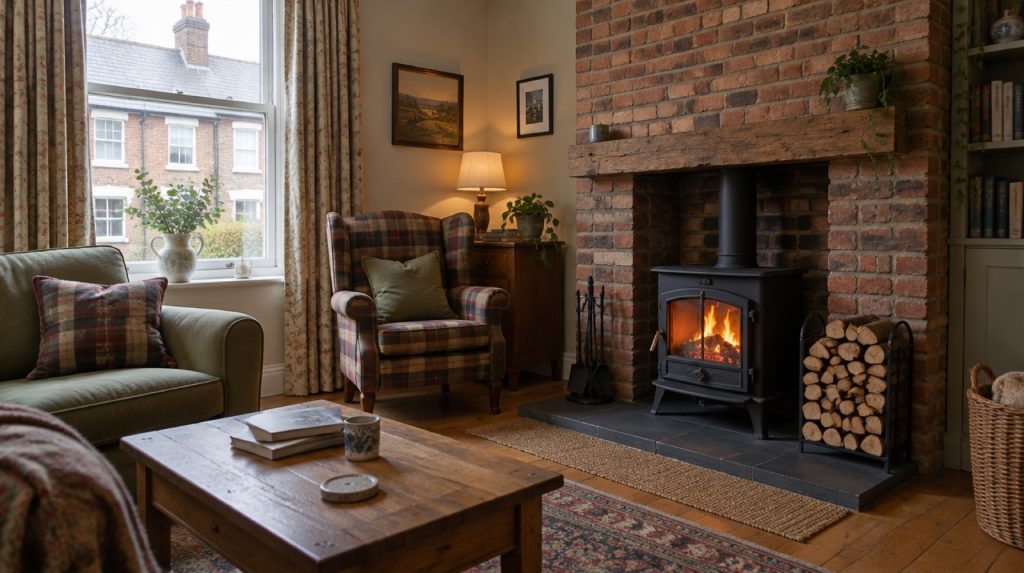
A freestanding stove sits on a hearth, either within a fireplace opening or out in the room. Wood burning and multi-fuel stoves are the classic example, but gas and electric stoves are available in the same style for homes where burning wood is not practical.
Freestanding stoves throw heat out into the room and make a strong focal point. They need more planning than other types:
- A hearth. Solid fuel stoves need a suitable non-combustible hearth beneath them. The rules on hearths, flues and combustion appliances in England are set out in Approved Document J (GOV.UK, Approved Document J).
- A flue. Wood and multi-fuel stoves need a chimney, usually with a liner, or a twin-wall flue system. Our guide to having a wood burner without a chimney explains how that works.
- Building regulations. Installing a wood burning or multi-fuel stove is subject to building regulations, and most of the work is notifiable to your local authority. A HETAS registered installer can self-certify the work instead, and you receive a certificate of compliance (HETAS, Building Regulations).
- Smoke control rules. Parts of Chorley are smoke control areas (Chorley Council, smoke control areas). In a smoke control area you can only burn authorised fuels unless you use an exempt appliance with the fuels its manufacturer approves (GOV.UK, Smoke control areas: the rules).
Wall-mounted and hole-in-the-wall fires
Wall-mounted fires hang on the wall or are recessed into it, often at a height where they can be seen across the room. Most are electric, which means no chimney, no flue and a lot of freedom over where they go. Some gas models can be wall-mounted too, but they need a suitable flue route, often through an outside wall.
These fires are a natural fit for modern living rooms and media walls. If you are planning a fire as part of a media wall, take a look at our media wall installation service, and our comparison of electric vs gas fires for media walls goes into more detail on the fuel choice.
Questions to answer before you choose
Before you speak to an installer, it helps to think about:
- Do you have a working chimney? If not, electric fires and some flued gas or wood options are still possible.
- Which fuel suits you? Mains gas, wood, multi-fuel or electric each bring different running, upkeep and installation considerations.
- Is the fire for heat or for look? Some homeowners want a main heat source, others want a focal point that adds warmth on cold evenings.
- How much space do you have? Freestanding stoves need clearance around them; wall-mounted and inset fires take up less floor space.
- Are you in a smoke control area? This affects which wood or multi-fuel stoves you can use.
Who should install your fire
The type of fire decides who is qualified to install it. By law, anyone employed to work on gas appliances in a home must be a Gas Safe registered engineer (HSE, Domestic gas FAQs). Wood and multi-fuel stoves should be installed by someone who can certify the work under building regulations, such as a HETAS registered installer. Electric fires that need new wiring should be connected by a qualified electrician.
Whichever type you choose, building regulations guidance on carbon monoxide alarms was extended from 1 October 2022, so ask your installer about fitting an alarm when a new or replacement fixed combustion appliance goes in (GOV.UK, Approved Document J 2022 amendments).
Frequently asked questions
What are the main types of fireplaces?
The three main types are inset fires, which sit inside a chimney breast or recess; freestanding stoves, which stand on a hearth; and wall-mounted fires, which hang on or are set into a flat wall.
Which type of fire is best if I do not have a chimney?
Electric fires need no chimney or flue, so inset or wall-mounted electric fires are the simplest option. Some gas fires and wood burners can also be fitted with a suitable flue system.
Does a freestanding stove need a hearth?
Yes. A solid fuel stove needs a suitable non-combustible hearth beneath it, as set out in Approved Document J. Your installer will check the hearth as part of the assessment.
Do I need building regulations approval for a new fire?
Wood burning and multi-fuel stove installations are subject to building regulations and most of the work is notifiable, which a HETAS registered installer can self-certify. Gas fires must be installed by a Gas Safe registered engineer.
Can I have a wall-mounted gas fire?
Some gas fires can be wall-mounted, but they need a suitable flue route, often through an outside wall. Your installer can confirm whether your wall and layout are suitable.
Summary
Inset fires make the most of an existing chimney breast, freestanding stoves create a classic focal point that throws out heat, and wall-mounted fires offer a clean, modern look with the most freedom over placement. The right choice depends on your chimney, your preferred fuel, your space and the style of your room.
If you are weighing up your options, our fireplace installation team in Chorley offers a design consultation and can help guide you through choosing the right fireplace for your home. You can also read what to expect from a fireplace installation in Chorley, or contact us to talk through your plans.


