

No two wood burner installations are the same. Two homes on the same street can need very different work, depending on the chimney, the room and the stove you want. This guide walks through the things that shape a wood burner installation, so you know what to expect before anyone comes to survey your home.
If you are still at the stage of deciding whether a wood burner is right for you, our wood burner installation page explains the service and how we work in Chorley.
It starts with a survey
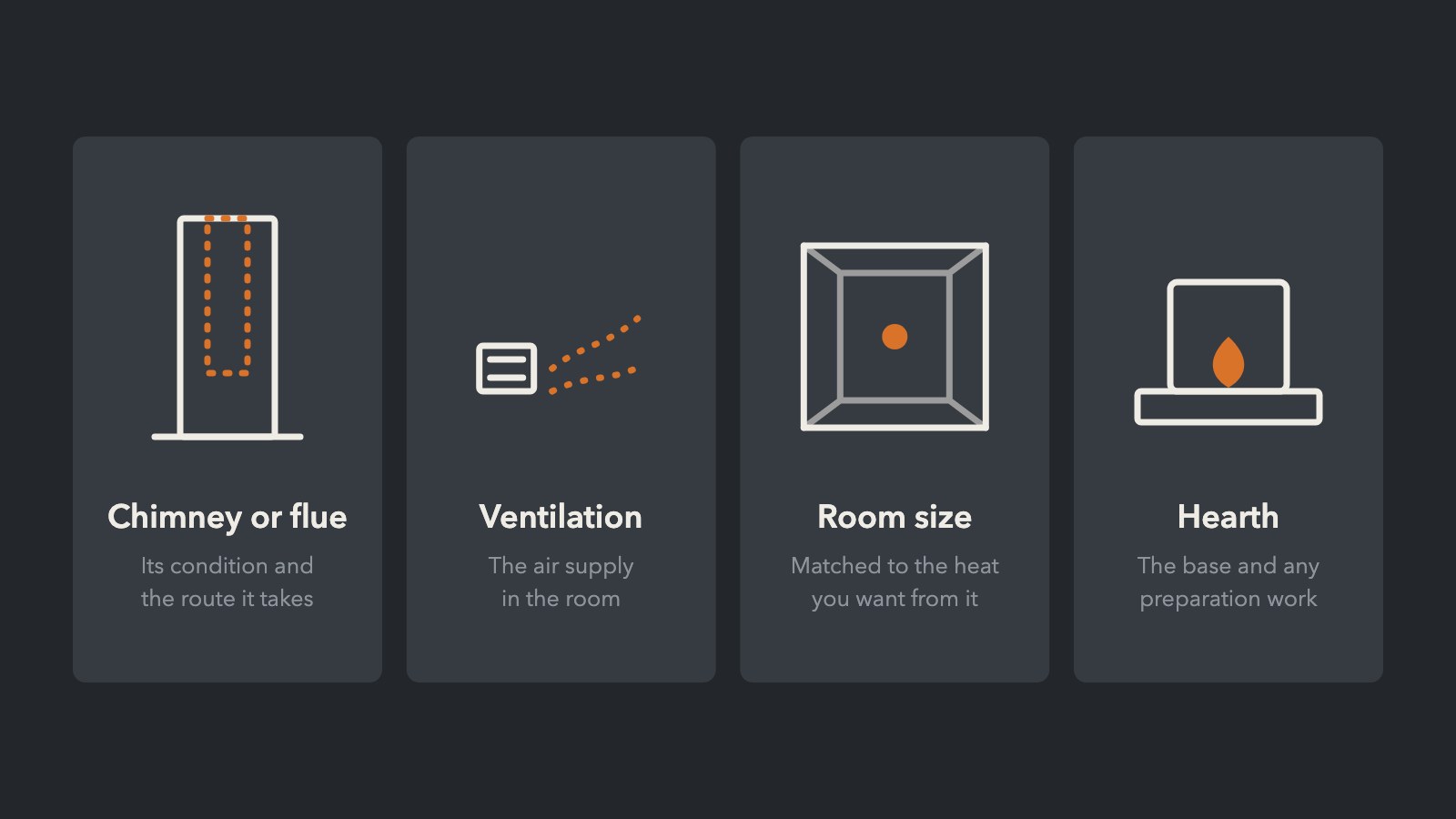
Every project begins with a visit to your home to understand your needs and assess where the wood burner will go. During the survey we look at three main things: the condition of your chimney, the ventilation in the room, and your heating requirements. Those three answers decide most of what follows, from the type of stove that suits your space to how much preparation the job needs, and how long it will take. Our guide on how long wood burner installation takes explains the stages.
Your chimney or flue
The chimney is usually the biggest single factor. If you have an existing chimney, its condition determines whether it can be used as it is or needs work, which can include flue lining. If your home has no usable chimney, a wood burner can still be an option, but the route for the flue changes the job. We cover that in detail in our guide on whether you can have a wood burner without a chimney.
Ventilation in the room
A wood burner needs a supply of air to burn properly, so the ventilation in the room is checked as part of the survey. It is one of the things that can seem minor until it is missed, which is why it is looked at before a stove is chosen rather than after it is fitted.
Room size and how you want to use it
The right stove depends on the room it is heating. An oversized stove can overheat a small room, while an undersized one may struggle in a large open-plan space. It also helps to think about how you will use the stove: as a main source of warmth on winter evenings, or as a feature that adds character to the room. Your answer helps us recommend something that suits both the space and the way you live.
Hearth and structural work
Depending on the property, an installation can involve hearth preparation, flue lining and, where required, structural modifications. Not every job needs all three, which is exactly why a survey comes first. It means the work is planned around your home rather than a standard template.
Wood-only or multi-fuel?
Multi-fuel stoves can burn both wood and other solid fuels, which gives you more flexibility than a wood-only stove. Our guide to how to choose the right wood burner for your home goes through the choice in more detail.
Style and where it sits in the room
A wood burner is often the centrepiece of a living room, so how it looks matters as much as how it performs. Traditional cast iron suits a classic setting, while a contemporary stove suits a modern one. Our team can talk through how a stove would fit your space.
Certification and safety
A wood burner is a safety-critical appliance, so it matters who fits it. When choosing an installer, it is worth asking to see their HETAS registration for solid-fuel work. Our article on why HETAS and Gas Safe certification matters explains what the registrations cover.
What affects the cost
The cost of a wood burner installation depends on the stove you choose, the condition of your chimney, whether flue lining or other preparation is needed, and any hearth or structural work. Because every home is different, we survey first and then give you an honest, upfront quote so you know what to expect before work begins.
Handover: using your new wood burner
Once the wood burner is installed, we show you how to operate it efficiently and safely. That includes guidance on fuel selection, lighting techniques and maintenance schedules, so you feel confident using it from the first evening. For ongoing care, see our tips on maintaining your wood burner.
Frequently asked questions
Can any wood burner go in any room?
No. The room size, ventilation and heating needs all affect which stove is suitable, which is why these are checked during the survey before a stove is recommended.
What is the difference between a wood stove and a multi-fuel stove?
A wood stove is designed for wood. A multi-fuel stove can burn wood and other solid fuels, which gives you more choice over what you use.
How do I know an installer is properly certified?
Ask to see their HETAS registration before booking, and ask what paperwork you will receive once the work is finished.
Will you tell me what the job involves before it starts?
Yes. We survey your home first, explain what is needed and give you an honest, upfront quote before any work begins.
Book a wood burner survey
If you are thinking about a wood burner in Chorley or the surrounding area, we would be glad to help. Contact us to arrange a survey and talk through what would suit your home.


